Spanish Christmas Menu
In Spanish, Christmas Eve is called La Noche Buena or The Good Night and in Spain it is celebrated with a large family feast that is eaten late in the evening and lasts a couple hours. Some families attend midnight mass before or after, although many families are still finishing dinner around the table at midnight! Christmas Eve is a time for celebrating in neighborhood bars and taverns and around the table with family and friends, not a time for gift exchanges or Santa Claus. That must wait until January 6th, which is Epiphany, a religious holiday.
We have put together a menu for Christmas Eve dinner, Spanish-style. It has several courses and includes tapas or appetizers, as well as dessert and coffee or after-dinner drinks. None of the recipes are terribly difficult to prepare and you certainly do not have to use all of them.
Pick and choose what you like and add some Spanish flavor to your Christmas table!
Tapas
Artichokes with clams: Artichokes are a popular vegetable in Spain, especially fresh from the market. They are often served sautéed with ham or stuffed with white sauce and ham or meat, etc. Sometimes served cold, they combine well with anchovies and piquillo peppers, or with salmon and capers, or tuna fish with a good olive oil.
|
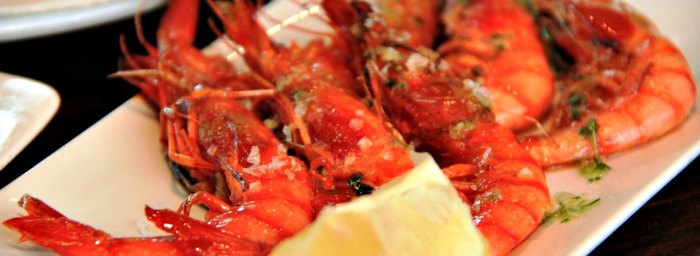
Gambas a la plancha (Pan-grilled shrimp): Spaniards love to eat grilled shrimp at the counter of a good tapas bar while sipping a glass of chilled fino sherry or cold beer. The bars are often crowded, leaving little or no space for proper eating, and I find it fascinating to watch the locals skillfully manage to eat shrimp with one hand while holding a drink in the other. |
Champiñones al ajillo: Few tapas taste more Spanish than champiñones al ajillo (ajillo mushrooms), dripping with olive oil, garlic and dry Spanish Sherry.
Prawn and Bacon Brochettes: The Spanish love bacon, which we cure and air-dry in the same way as our famous jamon. This combination of prawns and bacon is inspired and very popular, and can be found at most Tapas bar, as well as in many banquets and receptions. It is an ideal treat for your guests when having a party at home!
Smoked Fish and Fruit Pintxos: Smoked fish and fresh fruit make a perfect match when combined in this recipe and served as an appetizer. Smoked salmon is now ubiquitous in Spain, particularly in the cities. Less evidence is traditional bacalao (salt cod), for which smoked mackerel is a substitute here.
Starters
|
Escudella means "bowl," and in Catalonia it is the name of a big stew-soup, escudella i carn d'olla, usually made for Christmas. The rustic taste of this stew is evident in the bones and feet, whose gelatin give such an unctuousness to the dish, and in the rough vegetables such as cabbage and turnips that were so common in the mountains and hills. |
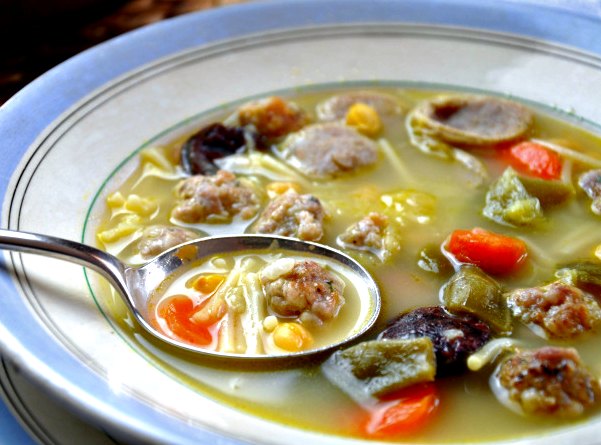
Cocido Madrileño: As happens with Escudella (see above), this recipe can make a whole meal by its own, you can eat the soup as a starter, and then the meat, or save the meat for the following day!
Garlic Soup: Bread and garlic soups are eaten for supper by the poor all over the country. This garlic soup is fortified with eggs and canned tuna, which I suspect has come to replace the traditional salt cod.
Main course
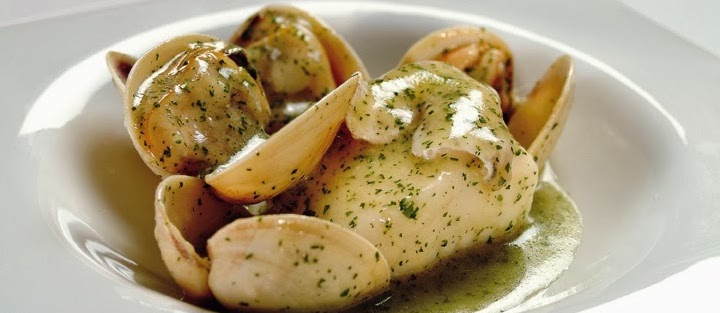
Merluza en Salsa Verde: This recipe is one of the front-runners of traditional Basque cooking. Salsa verde appears in many dishes: with clams alone, with monkfish or fresh cod, or with a combination of clams and hake, as in this recipe.
Cordero Asado - Roast Lamb: Roast lamb will not disappoint you or your guests at Christmas dinner. It is less work than roasting a turkey or duck and is much tastier. Havent you had turkey already this holiday season? Why not try Cordero Asado - Roast Lamb this year?
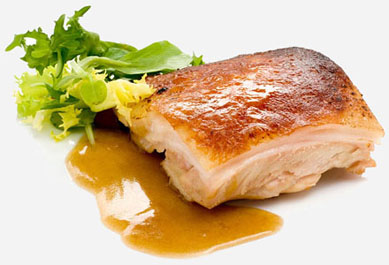
Cochinillo asado: You’ll find this dish served all over Spain, but it is typically Castilian. Segovia, famous for its Roman aqueduct, is also well known for its wonderful cochinillos, or “suckling pigs,” which many local establishments specialize in roasting to perfection. Throughout Castile, most cities and even small villages also have restaurants that serve cochinillos to the delight of residents and tourists alike.
|
Escabeche de pollo de navidad: This unusual escabeche recipe is prepared in Extremaduran households for Christmas Eve. Although several steps are involved, the recipe is not difficult, and its extraordinary flavor is worth the preparation time. |
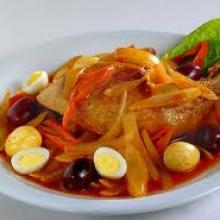
Grouper a la Mallorquina: When a fish is prepared a la mallorquina you know that it will be cooked with a variety of vegetables piled on top. Ideally, the fish is a whole and weighs at least five pounds. Grouper is a good choice, but so is red snapper, striped bass, John Dory, or any other lean, white fleshed fish. The crown of colorful vegetables not only looks pretty but also infuses the fish with sensational flavor.
Caldereta de Langosta (Lobster Stew): An exceptional Lobster stew, typical from the Balearic Islands, and celebrated all over Spain.
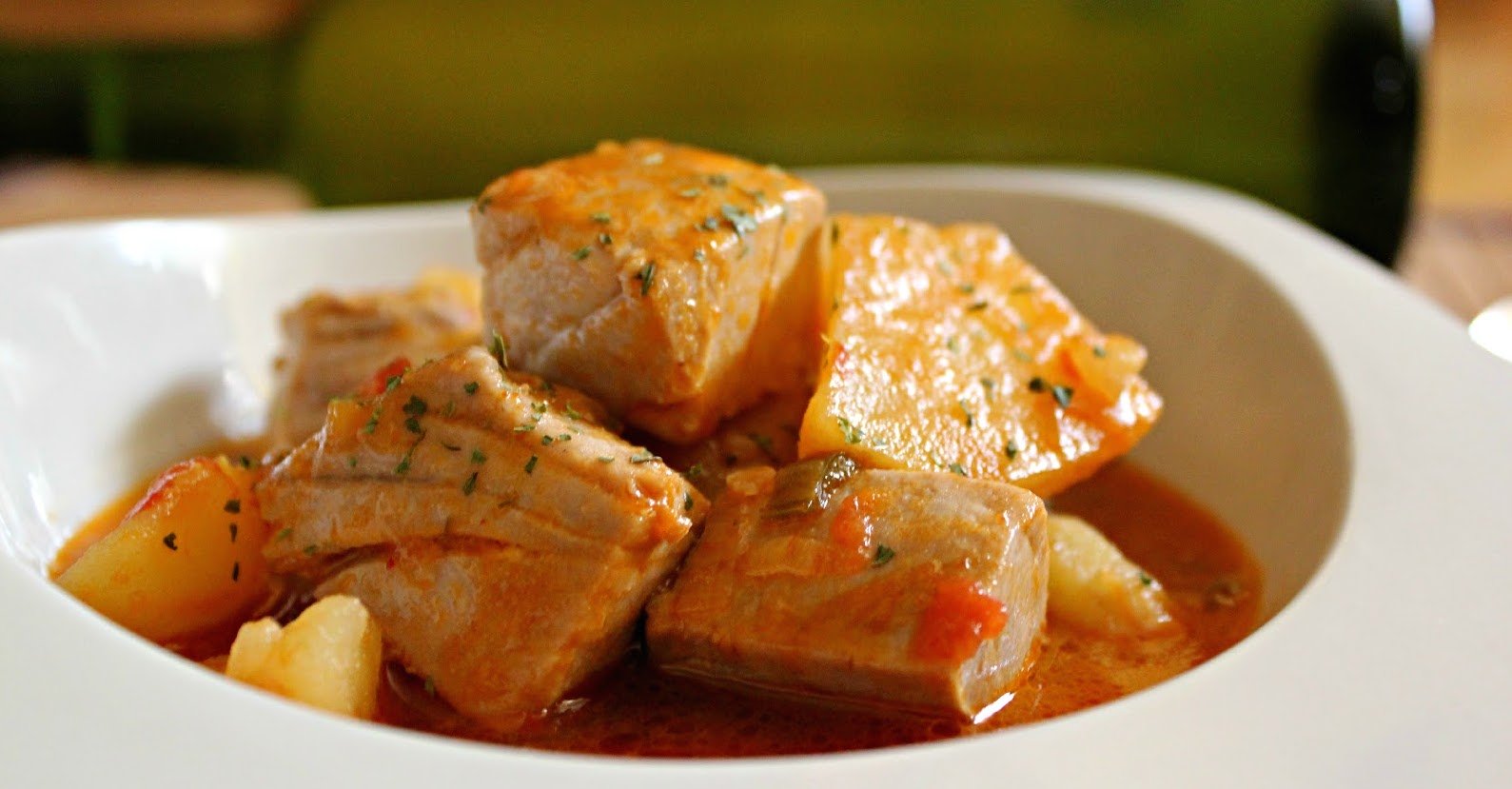
Marmitako: Marmita translates as 'pot' or 'casserole' in Basque, while the suffix ko is the genitive case, so that marmitako literally means 'from the pot'. Of course, just about everything in Basque cooking comes 'from the pot', but only this venerable dish goes by that name.
Dessert
After a brief pause to catch your breath and clear the table, dinner continues with dessert or postre. At Christmas time that means plates of delicious:
- Turrón, Spanish almond candy.
- Polvorones or almond cookies.
- Mantecados or Spanish crumble cakes.
Read this article to learn about the most common Spanish Christmas Sweets.
You may be also interested in...
Product of the month |
Recent Articles


-
Lacon con Grelos - Boiled Ham with Greens
Oct 25, 17 06:18 AM
 In Galicia, the meat used for this recipe is the lower portion of the front pork leg, or hock, and it's salt cured. I prepare it with fresh hocks, and it's also delicious.
 -
Esqueixada
Aug 31, 17 06:20 AM
 Esqueixada is a quintessential Catalan salad. The main ingredient is always cod. Some versions also include green bell peppers; others eliminate the peppers altogether
 -
Spanish Salads - Ensaladas
Feb 09, 17 05:26 AM
 DURING THE HOT summer months, Spaniards look forward to their cuisine’s rich array of cold soups and salads.