Galicia Recipes: Sea and Land
Its cuisine is one of the main tourist attractions of Galicia: the exquisite delicacies of this region are based on the high quality and variety of the local products used in the preparation of dishes. Country, farm and sea products are unique in their characteristics and quality. Furthermore, it cannot be forgotten that one of the main pillars of Galician cooking is the professionalism of its experts. Galician chefs are found world-wide.
The importance of its gastronomy is manifested at the more than 300 gastronomic fiestas which are held in Galicia throughout the year. The origins of these exaltations to local produce, which arouse much interest in visitors, lie in the many local and regional traditional fiestas held during harvest time or religious holidays, such as the "romerías", where promises are made to the patron saint and then completed with a traditional meal. Some of these fiestas attract great crowds and have been recognized as of national tourist interest.
From the sea
Traditionally Galicia, with its 1,200 kilometer coastline and countless sea ports and harbors, has always been a region where the sea is all important, one of the main activities of its inhabitants being that of fishing. Today, Vigo is the main fishing harbor in Europe and the Galician rias are the main producers of mussels in the world.
Its exceptional coastline, formed of the highest cliffs in Europe, and the placid waters of the rias, together with the rich nutrients found in this part of the Atlantic Ocean, have given rise to a unique ecosystem which supplies the most exquisite culinary products
|
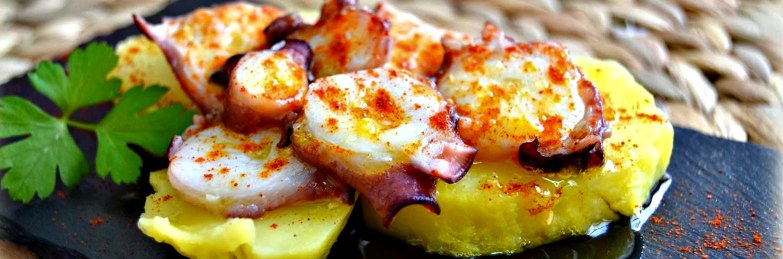
Pulpo a Feira: Though it originated in Galicia or the neighboring region of Leon, pulpo a feira, as it is known in Galician, or pulpo a la gallega, as it is called in Spanish, is now popular throughout Spain. It is usually served on wooden plates with cachelos, potatoes that have been boiled or roasted in embers with their skins on. |
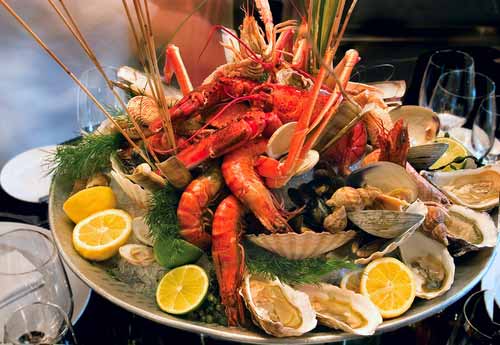
Barnacles from the coast which have been bashed by the strong Atlantic waves, crayfish, scallops, spider crabs, "nécoras" (small crabs), shrimps, "bueyes de mar" (large crabs) and lobster from the rias, together with the oysters, mussels, cockles, clams, octopus, cuttlefish, turbot, red bream, sardines, sargo (similar to bonito), sea bass and many other types of fish which populate the Galician waters.
 | PREORDER Percebes Fresh Wild Goose Barnacles: The wildest, most spectacular food in Spain is percebes! Traditionally, these precious goose barnacles are harvested by hand from wave battered rocks in Galicia in the north of Spain. Now we have discovered a source in the Pacific Northwest, and can deliver them fresh to your door. Percebes are arguably the most expensive food in Spain, fetching up to $200 per kilo at fine restaurants. The reason? Each delicious one is harvested by hand from the treacherous rocks of the Galician coast. Foragers dash between giant crashing waves to cut away a small handful of these precious barnacles, a very dangerous endeavor indeed. |
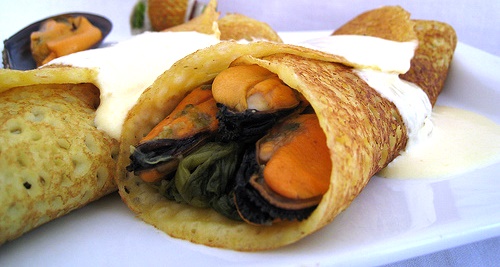
Mussel pancakes: Galician mussels are the best in the world and this simple recipe shows them off perfectly. The thin crêpes are related to the ones made in Brittany, which shares the same Celtic culture.
The centuries-old fishing tradition of Galicia has resulted in fish markets which offer the best variety of deep-sea fish, such as tuna, hake, cod, Pollack and the delectable mackerel. Simple recipes for top quality products. This is the traditional cooking of Galicia: what really counts is the raw material.
From the land
If the coast is rich in produce, interior Galicia is no worse off Peppers with Denomination, such as those from Padrón, potatoes from Bergantiños, parsnip tops throughout the region; "Pan de carballo" and "cea" and corn. Nuts such as chestnuts, walnuts, hazelnuts and almonds; and we must not forget the wild and tasty mushrooms, the blueberries and forest honey.
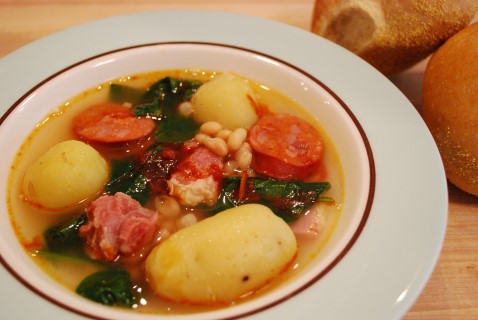
Caldo Gallego: Restaurant chefs in Galicia usually prepare this soup with many ingredients in multiple pots. But at home, most Gallegos make a straightforward recipe: just one stockpot in which everything is cooked together, with the ingredients added according to the time required to cook them. When turnip greens are out of season, they use cabbage instead.
Vegetable dishes include Caldo gallego, made of green beans, chard, French beans, cabbage and parsnip tops, potatoes and haricot beans.
The most important meat in Galicia is beef. It is eaten very young as veal, and the best animals bear the "ternera gallega" seal of quality. This meat is used to prepare hundreds of recipes, such as the exquisite sirloin steak, the popular "caldeiro" (type of stew) and "Galician cocido", made with potato and chickpeas.
The visitor who prefers his meat well-done, must try Galician ox, which has crossed borders and been incorporated into the cuisine of other Spanish regions, such as the Basque Country. Another specialty is roast suckling pig, which is always present on the best tables and at celebrations. Furthermore, its poultry range includes the free-range cockerel and of course the famous capon, a free-range castrated cock which has been carefully raised and fed and is a specialty at Christmas.
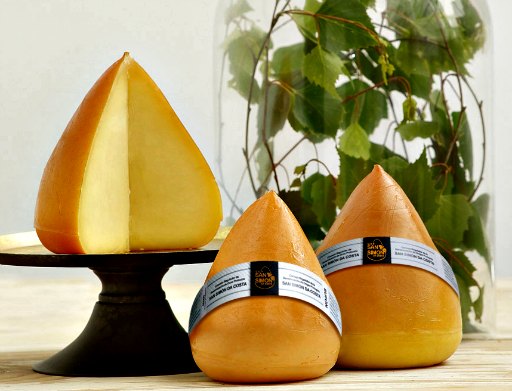
With regards its cheese, the majority are prepared using cow's milk. Galicia maintains Denominations for such cheeses as Tetilla, Ulloa, San Simón and O Cebreiro. Its cooked ham is used to prepare the typical ham with parsnip top.
|
Tetilla cheese: Matured cheese, from fresh to semi-cured, ripened for a minimum of seven days, made from whole milk from Friesian, Swiss Brown and Galician Blonde cows fed by traditional techniques.Its flavour is creamy and slightly salty, its texture is fine and its colour yellowish ivory, although undoubtedly its greatest characteristic is the peculiar breast-like shape that gives it its name (tetilla means small breast). |
 |
Interior Galicia loves its sausages, the most important with regards originality being the "androlla" sausage and "botelo", which is smoked and then cooked. Its "chorizos" and "salchichones" (salami-type sausages) are of top-quality. Furthermore, other parts of the pig are used to make Galician stews such as streaky bacon, snout, the meat around the vertebrae, trotters, etc.
Galicia also cultivates its own wine and boasts five different Denominations of Origin. The most famous of its liqueurs is the "aguardiente gallego", a high-proof distillate which is used to make the traditional mulled drink known as "queimada" (sugared "aguardiente" which is flamed).
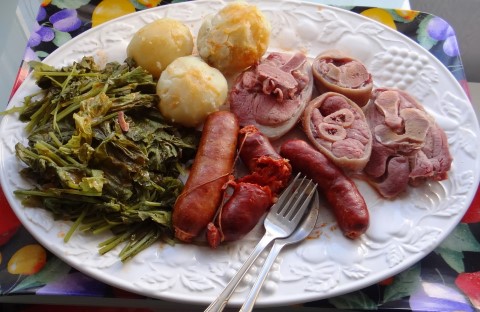
Lacon con Grelos - Boiled Ham with Greens: In Galicia, the meat used for this recipe is the lower portion of the front pork leg, or hock, and it's salt cured. I prepare it with fresh hocks, and it's also delicious. Grelos, or turnip greens, are tender when young, usually during the winter, which is when this dish is normally eaten. Galician chorizo sausages, which are slightly hot, are a perfect partner to the ham and greens.
Some galician recipes
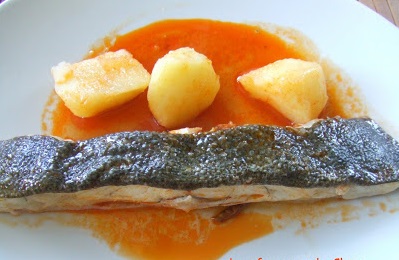
Rodaballo a la Gallega: The Galicians are the great fishermen of Spain, and the turbot is the king of the catch. Even if it is farmed, as is increasingly the case today, turbot is a great fish. But when it is wild, the flesh is firmer and its characteristic flavor is more intense. No matter how you cook it— seared, fried, baked, roasted whole— turbot tastes exquisite.
In this Galician recipe, the fish is not filleted, but rather cut crosswise through the central bone. In my opinion, the head contains the best parts of the fish and, if you sit among family members or friends, don’t be shy about nibbling on it.

Vieiras en su concha: Scallops are common in Galicia and are typically sold in the shell. In the United States, scallops in the shell are far less common, but you can buy just the shells at many cookware shops.
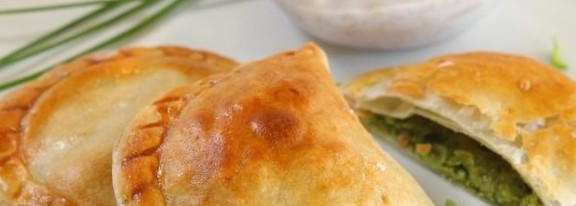
Tuna and goat cheese empanadillas: Empanadas are crisp turnovers that can be filled with anything from ham and cheese to spinach and pine nuts, or the previous day's leftovers. Altough they are often associated with South America, empanadas originated in Spain's northwestern region of Galicia, where they remain immensely popular to this day. Empanadillas, the smaller, pocket-size versions of empanadas, are generally served as tapas, and, because no silverware is required to eat them, make perfect party food.
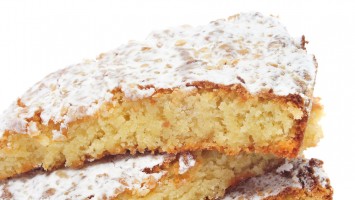
Tarta de Santiago is a traditional cake from northern Spain. The tarta is dense and rich in flavor and is well-known in Santiago, Spain as a delectable treat used to lure passers-by into restaurants or cafés.
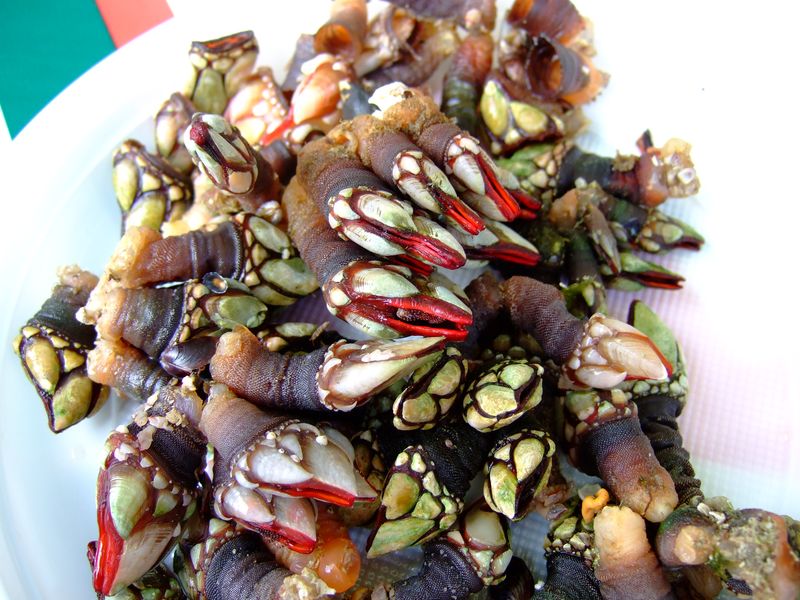
Percebes: Tube shaped, as thick as an index finger, and about three inches long, percebes (gooseneck barnacles) grow in clusters on rocks along the coasts of northern Spain and Portugal. They are expensive because of their scarcity and the difficulty and danger involved in gathering them. Harvesters must wait for low tide and then scale the sharp rocks where the barnacles are growing, always keeping an eye on the heavy surf that threatens to sweep them away.
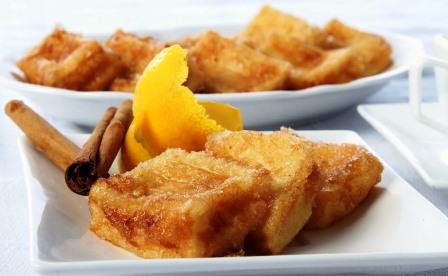
Leche frita (fried milk) is a traditional Spanish dessert recipe. It's quite easy to do, and the results are spectacular! If you want to impress your guests with a non-conventional, yet succulent dessert, try this easy recipe.
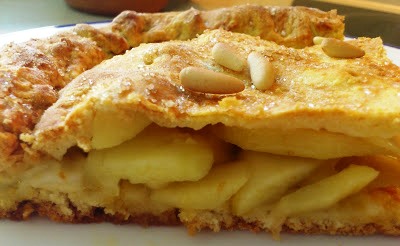
Empanada de manzana (Apple empanada): Though empanadas are most often thought of as savory pies, they can also be made of fruits and served as a dessert or for merienda (teatime). For the best results, I recommend using tart, slightly acidic apples for this recipes.
You may be also interested in...
Featured |
 Conservas de Cambados Galician Seafood Gift Box Conservas de Cambados Galician Seafood Gift BoxGourmet Selection of Four Classics |
Recent Articles


%20is%20a%20traditional%20Spanish%20dessert%20recipe.%20It's%20quite%20easy%20to%20do%2C%20and%20the%20results%20are%20spectacular!%20If%20you%20want%20to%20impress%20your%20guests%20with%20a%20non-conventional%2C%20yet%20succulent%20dessert%2C%20try%20this%20easy%20recipe.)
.%20For%20the%20best%20results%2C%20I%20recommend%20using%20tart%2C%20slightly%20acidic%20apples%20for%20this%20recipes.)
-
Lacon con Grelos - Boiled Ham with Greens
Oct 25, 17 06:18 AM
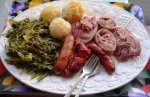 In Galicia, the meat used for this recipe is the lower portion of the front pork leg, or hock, and it's salt cured. I prepare it with fresh hocks, and it's also delicious.
 -
Esqueixada
Aug 31, 17 06:20 AM
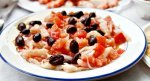 Esqueixada is a quintessential Catalan salad. The main ingredient is always cod. Some versions also include green bell peppers; others eliminate the peppers altogether
 -
Spanish Salads - Ensaladas
Feb 09, 17 05:26 AM
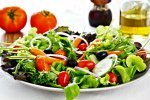 DURING THE HOT summer months, Spaniards look forward to their cuisine’s rich array of cold soups and salads.